If you own a restaurant, you already know how much the industry has changed. Customers expect to be able to browse your menu, place an order, and pay for it online — all without picking up the phone. What they probably do not know, and what many restaurant owners do not realise either, is that you DO NOT HAVE to hand that process over to a third-party delivery platform and pay a commission on every single order you receive.
Platforms like Deliveroo, Uber Eats, and Just Eat have made online food ordering mainstream, and for that they deserve credit. But they have also made themselves the middleman between you and your customers, collecting fees that typically range from 15% to 35% per order. For a restaurant operating on already tight margins, that is a significant amount of money leaving your business every month.
This guide is written specifically for restaurant owners who want to take back control. We will walk you through everything you need to build your own restaurant website with online ordering — from the technology you need and the costs involved, to how to drive traffic to your platform through Google Ads, social media, and local SEO.
Your OWN online ordering platform is possible (and it's not too expensive)
The idea of building your own food ordering system can feel daunting. You might picture months of development work, a dedicated technical team, and an eye-watering budget. The reality in 2026 is quite different, and it will be even more different in the coming years.
Thanks to the maturity of the WordPress ecosystem and the affordable tools available within it, setting up a fully functional restaurant website with online ordering is something that can be done at a fraction of what you might expect.

We are not talking about a basic "contact us to order" form — we mean a real, end-to-end system where customers can browse your menu, customise their order (choose their pizza toppings, select portion sizes, add notes), choose between delivery and collection, select a time slot, and pay online.
All of this on your own website, under your own brand, with zero commission going to a third party.
The same setup can also include table reservations, allowing you to manage both sides of your restaurant's customer flow from a single platform. If you only need one of the two — just ordering, or just reservations — you can configure the system accordingly. You are not forced to activate features you do not need.
One aspect that is often overlooked at this stage is language. If your restaurant attracts international visitors, or if you operate in a multilingual city, your platform can be set up to work in multiple languages without any big additional complexity. This is a meaningful advantage when it comes to reaching a broader audience.
You can get a licence for this functionality on your existing website for about £150. The costs for the setup change depending on the agency that you hire to integrate it and build the entire system for your needs, the services that you offer and you own payment system. I can do it for you for less than £1000.
What you need to build your independent food ordering platform
Before diving into the technical side, it helps to understand what the components of your platform actually are. Think of it in three layers: your website foundation, your ordering system, and your payment processing.
1. Your website (the foundation)
Every online ordering platform needs to live somewhere. Your restaurant website is that home. It needs to be fast, mobile-friendly (the majority of food orders are placed on smartphones), and visually consistent with your brand. If you do not already have a website, this is where the build starts.
2. Your ordering system (the engine)
This is the software that manages your menu, handles customer orders, calculates delivery zones, sends confirmation emails, and feeds information back to you so you can fulfil each order.
On WordPress, this can be handled by an affordable, well-supported plugin that gives you full control over every aspect of your setup — from the structure of your menu and the toppings and variations available on each dish, to the delivery areas you serve and the time slots you offer.
A well-chosen tool of this kind allows you to define delivery zones on a map (you can draw precise coverage areas to avoid accepting orders you cannot fulfil), set minimum order values, manage deals and discounts automatically, and label menu items with attributes such as vegetarian, vegan, or contains nuts — which both improves the customer experience and helps with legal compliance in many markets.
3. Your payment gateway
Customers need to be able to pay online. Integration with providers such as Stripe or PayPal is standard and straightforward to configure. Once set up, payments are processed securely on your website and transferred directly to your account — again, with no third-party platform taking a cut.
These three components together form a complete, professional food ordering system. Setting them up requires some initial work — this is where working with a web professional adds real value — but once live, the system is entirely yours to manage.
How much does a food ordering website cost
This is often the first question restaurant owners ask, and understandably so. The honest answer is that costs vary depending on the complexity of your menu, the level of customisation you need, and whether you choose to work with a professional agency or attempt a "Do It Yourself" approach. That said, the overall investment is far more accessible than most people expect.
Here is a realistic breakdown of what you should budget for:
Domain and hosting. A professional domain name typically costs between £10 and £20 per year. Managed WordPress hosting from a reputable provider runs from around £15 to £50 per month, depending on the level of performance and support you require. For a restaurant ordering platform, a reliable mid-tier hosting plan is usually sufficient.
The ordering system plugin. The type of WordPress tool described in this guide is available at a one-time licence fee of around £150, with optional annual renewals for ongoing updates and support. There is no monthly subscription, no per-order fee, and no revenue share. You pay once and the system is yours to use indefinitely.
Website design and development. This is where the investment varies most significantly. A basic setup with 5 main pages — clean design, configured menu, active ordering system, payment integration, and mobile optimisation — might range from £1,500 to £4,000 depending on your location and the agency you work with. A more custom design, with bespoke branding, photography integration, and multilingual support, will sit higher. The key point is that this is a one-time investment that pays for itself quickly when you consider the commissions you would otherwise be paying to third-party platforms.
Ongoing maintenance. Like any digital system, your website will need occasional updates and maintenance. A maintenance agreement with your web agency, or a self-managed plan if you are comfortable doing so, typically costs between £50 and £150 per month.
It is really worth it?
To put this in perspective: if your restaurant processes £5,000 per month in delivery orders through a third-party platform at a 25% commission rate, you are paying £1,250 per month — or £15,000 per year — in fees. A one-time investment in your own platform pays for itself within weeks.
Choose WordPress for flexibility, scaling, and customisation
There are many platforms available for building websites, but WordPress remains the most widely used content management system in the world for good reason. It powers over 40% of all websites on the internet, which means it has an enormous ecosystem of tools, developers, and documentation behind it.
For a restaurant owner, the practical benefits of WordPress come down to three things: flexibility, scalability, and cost-effectiveness.
- Flexibility means that WordPress is not locked into a single way of doing things. Whether your restaurant serves traditional Italian cuisine with a tightly defined menu, or a modern fusion kitchen with complex toppings, variations, and meal bundles, the platform can accommodate it. The ordering system can be configured to match your exact operational model — your opening hours, your delivery zones, your preparation times, your special deals on weekday lunchtimes.
- Scalability means that as your business grows, your website can grow with it. You might start with online ordering for a single location, then expand to table reservations, then add a second restaurant. WordPress supports all of this without requiring you to rebuild from scratch.
- Cost-effectiveness is perhaps the most compelling argument. Unlike purpose-built restaurant software platforms that charge monthly fees and commissions, a WordPress-based setup gives you ownership of your system. You are not renting the technology — you own it.
A further advantage that deserves particular attention is tracking and measurement. A WordPress website built with proper configuration integrates cleanly with Google Analytics, Google Tag Manager, Meta Pixel, and other advertising measurement tools. This matters enormously if you plan to run paid advertising campaigns — which we will cover in detail in the next section. When a customer lands on your website from a Google Ad, completes an order, and the system records that conversion, you have concrete data to work with. You know exactly which campaigns are generating orders, what your cost per acquisition is, and where to invest your advertising budget. This level of transparency is simply not available when you rely on third-party platforms for your orders.
What makes a good restaurant website
Having an ordering system is essential, but it is only part of the picture. The quality of your website as a whole will determine how many of your visitors actually convert into paying customers. Here is what separates a restaurant website that drives consistent orders from one that simply exists online.
Speed and mobile performance
The majority of food orders are placed from a mobile device, often in the evening when someone is deciding what to have for dinner. If your website takes more than three seconds to load on a smartphone, a significant proportion of those visitors will leave before ever seeing your menu.
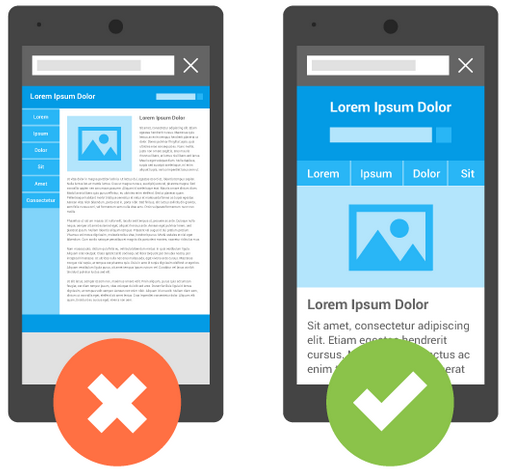
Optimising for mobile speed — through efficient hosting, compressed images, and lean code — is not optional. It is a fundamental requirement.
A clear, well-structured menu
Your menu is the single most important piece of content on your website. It should be easy to navigate, clearly organised by category, and rich enough in detail that customers feel confident ordering without needing to call you. Good menu presentation includes dish descriptions, ingredient highlights, allergen information, and high-quality food photography where possible. Even a modest investment in professional food photography pays dividends in conversion rates.
A frictionless ordering experience
Every step that a customer has to complete between "I want to order" and "my order is confirmed" is an opportunity for them to abandon the process. The ordering flow should be intuitive, with clear calls to action, a simple customisation interface for dishes with options, and a checkout process that does not require customers to create an account if they do not want to. Guest checkout should always be available.
Trust signals
For a customer ordering from your website for the first time, trust is a critical factor. This means displaying your restaurant's address and phone number prominently, showing real customer reviews, having a clear privacy policy and terms of service, and using a secure (HTTPS) connection. Payment security logos at the checkout stage also help to reassure customers that their card details are safe.
Local SEO foundations
Your website should be optimised for local search from the ground up. This means including your location naturally throughout your content, embedding a Google Maps widget, and ensuring your NAP (name, address, phone number) information is consistent across your website and your Google Business Profile. We will expand on local SEO strategy below.
Driving more traffic to your food ordering platform
Building the platform is step one. Getting people to use it is step two, and it requires a deliberate, multi-channel approach.
Google Ads for restaurants
Paid search advertising is one of the most effective tools available to restaurant owners who want to acquire new customers quickly.
When someone in your area searches "pizza delivery near me" or "order sushi online [your city]", a Google Ad places your restaurant at the very top of the results page — above the organic listings and, in many cases, above the third-party platforms that might otherwise capture that intent.

The critical advantage of running Google Ads to your own website, rather than relying on aggregator platforms, is data ownership. With proper conversion tracking configured — which is entirely achievable on a WordPress site — you can see exactly how many orders each campaign generates, what the average order value is, and what you are paying per new customer. This data allows you to continuously refine your campaigns and improve your return on investment over time.
This is something I know from direct experience: I have been managing Google Ads for a restaurant client in Rome for over two years. By running campaigns directly to their own ordering platform, rather than to a third-party aggregator, we have been able to track every conversion precisely, optimise bidding based on real revenue data, and steadily reduce their cost per order while increasing overall volume. The combination of an owned platform and well-managed paid advertising is significantly more powerful than either element alone.
For a deeper dive into how to use paid advertising for your restaurant, take a look at our guide on Google Ads for restaurants and our broader overview on how to advertise a restaurant.
Social media advertising
Meta's advertising platform (Facebook and Instagram) is particularly effective for food businesses because of the visual nature of food content and the highly precise targeting options available. You can target users within a specific radius of your restaurant, people who have previously visited your website, or audiences that closely resemble your existing customers.
As with Google Ads, running social campaigns to your own website — rather than to a third-party ordering page — means you can track precisely which adverts are generating orders. The Meta Pixel, installed on your WordPress site, records every time someone completes an order after clicking one of your adverts. This data feeds back into Meta's algorithm and improves your targeting over time, making your campaigns progressively more efficient.
Local SEO
For a restaurant, local search engine optimisation is arguably the highest-return marketing activity you can invest in, because it generates traffic with no ongoing cost per click. The goal is to appear prominently in Google's local results — particularly the "local pack" (the map-based results that appear at the top of the page) — when people in your area search for the type of food you serve.

The foundations of a strong local SEO strategy for a restaurant include:
- Google Business Profile optimisation. Claim and fully complete your Google Business Profile, including your category, opening hours, menu link, photos, and a description that naturally incorporates the keywords your customers would use. Actively encourage satisfied customers to leave reviews, and respond to every review — positive and negative — professionally.
- Consistent NAP data (Name, Address, Phone number). Your restaurant's name, address, and phone number should be identical across every platform where you appear — your website, Google Business Profile, TripAdvisor, Yelp, Facebook, and any local business directories. Inconsistencies confuse search engines and reduce your authority in local results.
- Location-specific content on your website. Your website's content should make clear where you are and what you serve. A page that naturally references your neighbourhood, your city, and the type of cuisine you specialise in will rank better for local searches than a generic template with no location context.
- Schema markup. Adding structured data (schema markup) to your website helps Google understand what your business is and what information to display in search results. For a restaurant, this includes your cuisine type, opening hours, address, and menu. A web developer can implement this as part of your initial site build.
Combining these local SEO foundations with a well-configured Google Business Profile and a fast, mobile-optimised website puts you in a strong position to capture high-intent local search traffic consistently, month after month, without ongoing advertising spend.
Conclusion
Building your own restaurant website with online ordering is not just a technical upgrade — it is a strategic decision that puts you back in control of your customer relationships, your data, and your margins. The technology required is affordable, proven, and well within reach for any restaurant owner who is willing to invest in their digital presence.
The combination of an owned ordering platform, proper conversion tracking, and a targeted advertising strategy — whether through Google Ads, social media, or organic local SEO — creates a compounding advantage over time. You acquire customers more efficiently, you understand their behaviour, and you retain more of every order because you are not sharing revenue with a third party.
If you are ready to explore what a professional restaurant website with online ordering could look like for your business, I would love to help. Every restaurant has different needs, and the right solution is always built around yours specifically.
Get in touch using the contact form below and tell me about your restaurant. I will come back to you with a clear, no-obligation overview of what is possible and what it would cost.