If you are about to invest in Facebook ads for your food delivery business, pause for a moment.
The strategies that worked just twelve months ago are already losing effectiveness, and the cost of ignoring Meta's latest updates could mean wasted budget and missed opportunities.
In this guide, I will walk you through exactly what has changed in 2026, what you need to prepare before launching your first campaign, and why your website is the silent partner that determines whether your ads succeed or fail.
What to consider before launching your campaign
Before you open Ads Manager, clarify three foundational elements.
First, define your ideal customer beyond demographics. Are they hungry professionals ordering lunch, families planning weekend dinners, or late-night snackers? Each group has different triggers, and your message must speak directly to their moment of need.
Second, set a specific, measurable goal. Do you want online orders, newsletter sign-ups, or phone calls? Your objective shapes your ad format, landing page, and tracking setup.
Third, prepare your conversion infrastructure. Install the Meta Pixel, configure events for purchases or leads, and test your tracking before spending a euro. Without accurate data, you are optimizing in the dark.
Fourth, gather your message vehicles. In 2026, one ad variation is not enough. Meta's system needs options to match the right message to the right user mindset. Prepare three to five distinct angles that address different customer awareness levels, which I will explain in detail later.
New 2026 algorithm: agencies are panicking!
...And here is the secret 🤫
Meta recently published research on its new adaptive ranking model, and the implications for advertisers are significant.
In simple terms, Meta has integrated a more sophisticated AI layer into its ad delivery system. Think of it as upgrading from a young librarian who recommends books based on overall popularity to a wise librarian who reads your mind and hands you exactly what you need in this moment.
Before 2026, success often came from aggressive hooks, interest-based targeting, and replicating top-performing creatives. If a headline with a discount code drove clicks, you would produce twenty variations of that same message.
This approach worked when audiences were less saturated and the algorithm relied heavily on surface-level signals like CTR.
Today, Meta's AI analyses deeper patterns: user intent, contextual relevance, and psychological readiness. It does not just match your ad to a demographic bucket; it evaluates whether your message resonates with what a specific person is thinking right now.
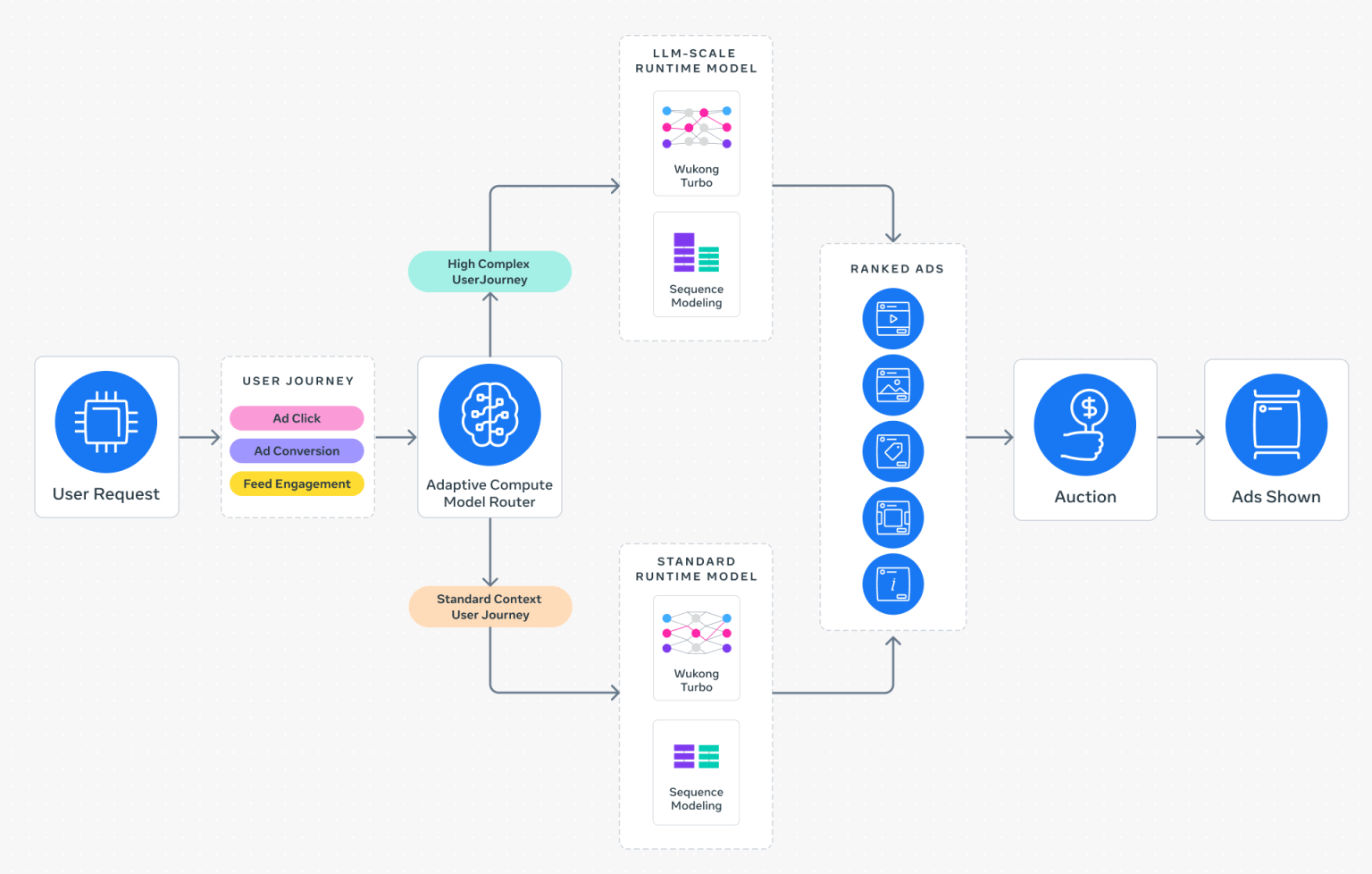
This is why you might see a beautifully designed ad underperform while a simpler, more empathetic message drives conversions. The algorithm is no longer just looking at the cover of the book; it is trying to understand the reader.
A practical example: a restaurant promoting "50% off your first order" might have seen strong results in 2023 by targeting foodies in a specific city. In 2026, that same ad could struggle because Meta now recognises that many users have developed "promotion blindness" for generic discounts.
However, an ad that says
"Tired of cooking after a long day? Get your favourite pasta delivered in 20 minutes"
might outperform because it addresses a specific emotional state and moment of need.
The critical takeaway is this: Meta's intelligence can filter and distribute your ads with incredible precision, but it cannot invent messages you do not provide. Your strategic input—crafting messages that align with real user mindsets—is now the primary lever for performance.
Steps to follow for your food delivery campaign
Setting up a campaign in 2026 requires more attention to structure and signals than in previous years. Follow this practical checklist to build a solid foundation.
1. Choose the right campaign objective
In Ads Manager, select "Sales" if you track purchases directly on your website, or "Leads" if you collect phone numbers or newsletter sign-ups. Avoid "Traffic" or "Engagement" objectives for food delivery—Meta will optimise for clicks, not conversions, and you will attract low-intent users.
2. Define your service area with precision
Geo-targeting is critical for food delivery. In the ad set settings, use the "Locations" field to target only the areas you can reliably serve. You have three options:
- Radius targeting: Draw a circle around your kitchen (e.g., 3 miles) to reach nearby customers. Ideal for single-location restaurants.
- Postcode targeting: Select specific postcodes. Best for controlling delivery zones and managing logistics.
- Drop-pin + radius: Place a pin on your address and adjust the radius based on delivery time guarantees.

Exclude areas where delivery is slow or unavailable. Wasted impressions in unreachable zones hurt your relevance score and increase costs.
Pro tip: If you serve multiple neighbourhoods with different menus or promotions, create separate ad sets for each zone. This lets you tailor messages like "Free delivery in Shoreditch" or "New vegan options now in Camden".
3. Set your audience parameters
In 2026, broad targeting often outperforms detailed interest stacking because Meta's AI finds converters more efficiently. Start with:
- Age: 18–65+ (adjust based on your typical customer)
- Languages: English, Spanish, German, etc.
- Detailed targeting: Leave blank initially, or add one broad interest like "Food delivery" or "Restaurants" if you prefer a slight guardrail

Let the algorithm learn. After 50–100 conversions, review the "Audience Insights" tab to see who actually converted, then refine if needed.
4. Allocate budget and schedule
For testing, start with a daily budget of £15–£30 per ad set. Run campaigns continuously rather than dayparting unless you have data showing specific hours perform better (e.g., lunch 12–2 pm, dinner 7–10 pm). Meta's algorithm needs consistent data to optimise.
5. Build your ad creative and copy
Use the message framework I describe in the next section to create 3–5 ad variations. Each should include:
- A clear, benefit-driven headline (e.g., "Hot pizza, delivered fast")
- Short, scannable primary text that speaks to a specific need or moment
- A strong call-to-action button: "Order now", "View menu", or "Get offer"
- High-quality visuals: show the food, the packaging, or a happy customer. Avoid generic stock photos.
Enable Advantage+ creative options to let Meta test combinations, but always review which versions win and why.
You can take inspiration from one of the most famous and effective USPs (Unique Selling Proposition) from Domino's Pizza:
Your pizza in 30 minutes or less, guarantee

6. Configure tracking and conversion events
Before launching, verify that:
- Meta Pixel is installed on your website and firing correctly
- The "Purchase" or "Lead" event is triggered on the thank-you page
- Aggregated Event Measurement is configured if you use iOS traffic
- UTM parameters are added to your ad URLs for cross-platform analysis in Google Analytics
Test the full user journey: click your ad, land on the page, complete an order, and confirm the event appears in Events Manager.in Events Manager.
Your website is the most important part
Imagine a user clicks your ad for Facebook Ads for food delivery. They land on your website. What happens next determines whether that click becomes revenue or a bounce.
Your landing experience must be coherent with your ad message. If your ad promises "healthy meal prep delivered weekly," your landing page should immediately reinforce that promise with clear visuals, benefits, and a straightforward path to order.
Disconnects between ad and landing page increase bounce rates and signal to Meta that your ad is not relevant, which can raise your costs over time.

For food delivery businesses, a professional, purpose-built website is non-negotiable. Platforms like Wix or AI-generated sites often lack flexibility and conversion-focused architecture needed for paid traffic. Instead, use a professional CMS like WordPress with a bespoke structure that respects your needs and where you can have your own customised food delivery platform. This gives you control over performance, SEO, and user experience.
Crucially, you need an ordering system that you actually own. Third-party marketplaces charge 20–30% per order and control your customer data.
In 2026, more restaurants are switching to dedicated food delivery software that integrates directly into their website. You purchase a licence once, install it, and keep every pound you earn.
These platforms manage menus, live order tracking, payment processing, and automated notifications without taking a commission. They are built specifically for high-converting traffic, meaning your paid ads send visitors to a fast, reliable checkout that belongs entirely to your business.
Complement your ordering system with essential plugins: a caching solution for speed, a security layer for protection. Every addition should serve a clear purpose and be kept up to date to avoid slowing down your site.
If you need help building a conversion-ready website for your restaurant or delivery service, I specialise in WordPress development for restaurants or food businesses. A well-structured site does not just support your ads; it multiplies their effectiveness.
Building your message strategy for 2026: awareness-based messaging
To leverage Meta's advanced AI, adopt a message-first approach. Your core offer—what you sell, to whom, and the primary benefit—remains stable. What changes is how you frame that offer based on where the customer is in their decision journey.
This awareness-based framework helps you craft messages that resonate at different stages:
- Unaware audience: They do not realise they have a problem. Message angle: "Long day? Skip the kitchen and enjoy restaurant-quality dinner at home." Focus on the symptom, not the solution.
- Problem-aware audience: They know they are hungry or short on time. Message angle: "Why spend hours cooking when your favourite meal is minutes away?" Highlight the problem and hint at relief.
- Solution-aware audience: They know food delivery exists but not your brand. Message angle: "Discover London's highest-rated burger delivery, now with contactless drop-off." Introduce your solution with a differentiator.
- Product-aware audience: They know you but need a reason to choose you. Message angle: "Join 5,000+ locals who order from us weekly. First order 20% off." Build trust and reduce friction.
- Most-aware audience: They are ready to order. Message angle: "Order now and get free delivery on orders over £25." Remove final objections with a clear offer.
Create ad variations for each awareness level. Test which angles attract higher-quality leads—not just more clicks, but more orders or sign-ups. Meta's algorithm will learn which messages resonate with which users and optimise delivery accordingly.
Remember, diversity in messaging beats diversity in aesthetics. Ten ads with the same core message but different images will not perform as well as three ads with distinct messages tailored to different mindsets. Feed Meta a menu of message vehicles, not a single dish.
Conclusion: spend smarter, not harder
The landscape of Facebook Ads for food delivery has evolved. Meta's 2026 algorithm rewards relevance, empathy, and strategic messaging over aggressive tactics and generic creatives.
Success now depends on 3 pillars: understanding your customer's mindset, crafting messages that speak to specific awareness levels, and ensuring your website delivers a seamless, conversion-focused experience after the click.
If you prepare these elements before launching, you will not only reduce wasted spend but also build a sustainable system that adapts as the platform changes. The goal is not just to run ads; it is to create a cohesive journey from first impression to satisfied customer.
Ready to audit your current Facebook ads strategy or build a high-converting website for your food delivery business? I help agencies and restaurants turn clicks into customers with professional website development.