How much do you charge for a website?When a client asks me this question, I always tell them that I need to know what features you want to implement and how many pages you want to create from the start.
There is no single honest answer to the question "how much does a website cost per page?" — and anyone who gives you a flat number without asking a single question first is either guessing or oversimplifying.
The real cost depends on a handful of variables: the technology stack, the complexity of the design, the development approach, and whether you want each page to actually rank on Google.
In this article, I will walk you through exactly how I quote web design projects, so you know what to expect before we even get on a call. Specifically, we will cover:
- Which platform or technology you choose and why it changes everything
- The three stages every page goes through: Design, Development,and SEO
- What each stage actually involves and why it costs what it does
- My base pricing per page, broken down clearly
Let's get into it.
My Base Pricing Per Page (WordPress)
Before diving into the variables, here is my standard pricing structure as a starting point.
These prices apply per page and DO NOT includeadditional features (such as contact form, blog, payment system, e-commerce functionality, booking systems, or custom integrations) or server setup and hosting configuration (hosting setup starts from €100).
| Service | Cost per page |
|---|---|
| Design | €80 |
| Development | €80 |
| SEO (optional if you don't need) | €80 |
| Total per page | €240 |
So, for example, a 4-page SEO optimised website — Home, About, Services, and Contact — would start from €960. What drives that number up or down is what we will explore now.
Which Platform Do You Want to Build On?
The first question I always ask a new client is: what technology do you want to use? Because this single decision has a significant impact on the time required and, therefore, the cost.
Custom Development (Laravel, React, Vue, etc.)
If your project requires a bespoke web application — built with frameworks like Laravel on the back end or ReactJS and Vue.js on the front end — development time increases considerably.

These frameworks involve writing code from scratch, giving you complete control and flexibility, but that comes at a cost. Every interaction, every layout, every database query has to be architected and built by hand.
This is the right choice for complex platforms, SaaS products, or businesses with highly specific technical requirements.
But it is usually not the common choice for a five-page corporate website.
WordPress: The Most Common Choice for SMEs
For freelancers, small and medium-sized businesses that do not need advanced or highly bespoke functionality, WordPress combined with a professional page builder such as Divi or Elementor is almost always the smartest choice.

It is faster to build, easier to maintain, and the ecosystem of plugins means you can add functionality without rebuilding from scratch. This is the approach I use most frequently, and it is what my standard per-page pricing is based on. It keeps costs reasonable without sacrificing quality.
Now, it is worth clearing up a common misconception: WordPress is NOT the same as Wix or Shopify. Platforms like those are closed, subscription-based environments where your customisation options are limited by what the platform allows — and if you ever want to leave, taking your content with you can be a real headache.
WordPress, by contrast, is open-source software that has been around since 2003. It was never built to lock you in. You own your data, you choose your hosting, and you can extend or customise virtually anything.

That is precisely why, more than two decades after its launch, WordPress powers over 43% of all websites globally — making it by far the most widely used platform on the internet, with a CMS market share of around 62.8%, almost ten times higher than Shopify.
The likes of NASA, Microsoft News Center, and Taylor Swift's official website run on WordPress. It is not a beginner's shortcut — it is the industry standard.
The key takeaway here is simple: the more custom the technology, the more time it takes, and the higher the cost per page.
Stage 1: Design — Building the Blueprint of Every Page

Before a single line of code is written or a single block is placed in a builder, every page needs a thoughtful design. This is not just about making things look attractive — it is about making deliberate, strategic decisions for each page.
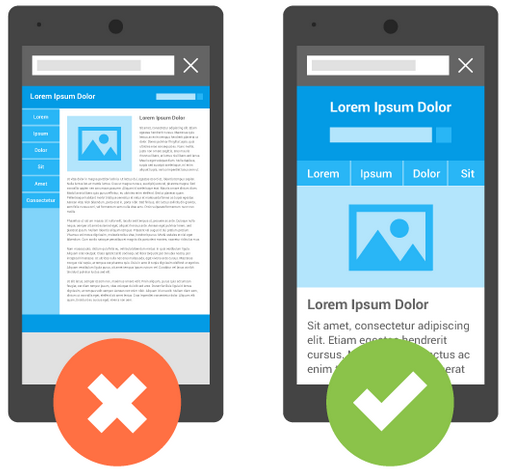
Good design means the page is accessible to all users, including those with visual impairments or disabilities. It means the layout responds correctly on every screen size, from a 27-inch desktop monitor to a mobile phone. It means the visual language — colours, typography, spacing, imagery — consistently reflects your brand and speaks directly to your target audience.
I do not use generic templates and call it design. Each page is planned with your specific business objectives in mind. What action do you want a visitor to take on this page? What information do they need, and in what order should they receive it? These questions shape every design decision.
This phase typically involves wireframing, layout planning, and style definition — and it is the foundation that everything else is built upon.
Stage 2: Development — Bringing the Design to Life
Once the design has been approved, development begins. This is the stage where the visual concept is translated into a working web page — either through code or using a site builder like Divi or Elementor within WordPress.
Development is not simply clicking and dragging elements into place. It involves ensuring that the page loads quickly, that interactive elements behave correctly, that forms submit properly, and that the page is structurally sound beneath the surface. Accessibility standards, browser compatibility, and performance optimisation are all part of this stage.
For custom-coded projects, development takes considerably longer because every component is built from scratch. For WordPress builds, the process is faster — but it still requires expertise to implement correctly and avoid the bloated, slow websites that poorly configured builders tend to produce.
Good development is invisible. When done right, the visitor notices nothing — they simply have a smooth, fast, frustration-free experience.
Stage 3: SEO — Making Sure Each Page Can Actually Be Found
A beautifully designed, perfectly developed page that nobody can find on Google is a missed opportunity. This is why I offer SEO as a core service per page, not an afterthought bolted on at the end.

SEO at the page level begins before any content is written. It starts with keyword research — identifying exactly what your potential customers are typing into search engines — and competitor analysis, understanding what pages are already ranking and why. This research is what tells us which pages are worth building in the first place.
This is a critical point that many clients overlook: not every page is equally worth creating from an organic traffic perspective. Before we finalise your site structure, it is worth asking: are there keyword opportunities we should be targeting? Are there pages that could attract high-intent visitors from Google, and others that would receive next to no organic traffic? SEO strategy should inform your site architecture from day one, not be applied as an afterthought once the site is live.
Once we know what each page needs to rank for, the content is structured accordingly — with the right headings, meta title, meta description, internal linking logic, and on-page copy that satisfies both the search engine and, more importantly, the human reading it.
Conclusion
Pricing a website per page is the clearest and most transparent way I know to quote a project. You know exactly what you are paying for at each stage — design, development, and SEO — and you can scale your project up or down based on your budget and your goals.
If you are wondering what your project might cost or which pages you should prioritise, I am happy to talk it through. Fill in the contact form below and let's figure out the right approach for your business together.